In an era where corporate social responsibility and employee well-being are at the forefront of business strategy, ISO 45001 has emerged as the definitive global benchmark.1 It is the world’s first international standard for Occupational Health and Safety (OH&S), providing a robust framework to prevent work-related injuries and ill health.
This article explores the core mechanisms of ISO 45001, focusing on hazard controls, the hierarchy of prevention, and the strategic advantages of a safe workplace.
ISO 45001:2018 is a management system standard designed to help organizations of all sizes create a safe working environment.2 Unlike previous guidelines that focused solely on physical accidents, ISO 45001 takes a holistic view, addressing both physical and psychological health (International Organization for Standardization [ISO], 2018).
The standard is built on the High-Level Structure (HLS), meaning it integrates seamlessly with ISO 9001 (Quality) and ISO 14001 (Environment), allowing for a unified approach to organizational governance (Al-Zahrani & Al-Ahmari, 2024).4
\
Under Clause 6.1.2, ISO 45001 requires organizations to proactively identify hazards before they lead to incidents.5 This is not a one-time audit but an ongoing process that considers:
Routine and Non-routine Activities: From daily desk work to infrequent heavy machinery maintenance.
Human Factors: Recognizing that fatigue, stress, and behavioral patterns contribute to risk (Tariq et al., 2023).
Emergency Situations: Identifying potential fire, chemical spills, or medical emergencies.7
By shifting from a reactive "accident investigation" model to a proactive "hazard identification" model, businesses can mitigate risks before they manifest as injuries.8
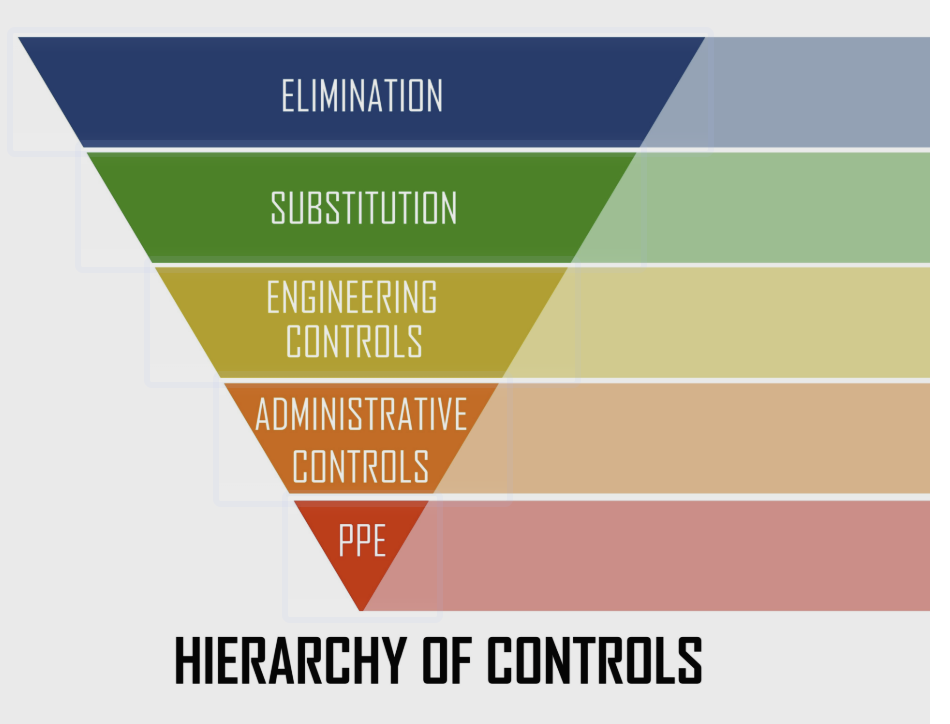
One of the most critical components of ISO 45001 is the Hierarchy of Controls. This provides a systematic approach to choosing the most effective safety measures. Rather than jumping straight to safety gear (PPE), organizations are encouraged to work down from the most effective to the least effective methods (García-Mainar et al., 2023).
Elimination: Physically removing the hazard (e.g., stopping the use of a dangerous chemical).
Substitution: Replacing the hazard with a safer alternative (e.g., using water-based paint instead of solvent-based).10
Engineering Controls: Isolating people from the hazard (e.g., machine guarding or soundproofing).
Administrative Controls: Changing the way people work (e.g., safety training, signage, and checklists).11
Personal Protective Equipment (PPE): Protecting the worker with gear (e.g., hard hats, gloves, and respirators).12
A unique pillar of ISO 45001 is the emphasis on Consultation and Participation of Workers (Clause 5.4).13 Safety is no longer a top-down directive; it is a collaborative effort.
Recent studies indicate that organizations involving employees in safety decision-making see a 30% higher compliance rate with safety protocols (Al-Zahrani & Al-Ahmari, 2024).14 Leaders are expected to demonstrate "felt leadership"—actively engaging in safety walks and ensuring the OH&S system is adequately funded and prioritized.
Implementing these controls offers significant ROI beyond just "doing the right thing":
Reduced Costs: Lowering the frequency of workplace accidents reduces insurance premiums, legal fees, and workers' compensation claims (García-Mainar et al., 2023).
Improved Productivity: Safe workers are more engaged and experience less downtime due to injury or illness.
Global Reputation: ISO 45001 certification is often a prerequisite for international tenders and supply chain partnerships.
Psychological Safety: The standard increasingly addresses burnout and mental health, which are critical in the modern remote and hybrid work environment (Tariq et al., 2023).
ISO 45001 is more than a checklist; it is a commitment to the most valuable asset of any organization: its people. By mastering hazard controls and fostering a culture of participation, businesses can transform safety from a compliance burden into a competitive advantage. In the modern world, a safe workplace is the hallmark of a resilient and sustainable enterprise.
Al-Zahrani, M. A., & Al-Ahmari, A. M. (2024). The impact of ISO 45001 on organizational performance and safety culture: A systematic review. Journal of Occupational Health and Sustainability, 12(1), 45–62.
García-Mainar, I., Montuenga, V. M., & Navarro-Paniagua, M. (2023). Workplace safety and productivity: Evidence from the implementation of ISO 45001. Safety Science, 158, 105978. https://doi.org/10.1016/j.ssci.2022.105978
International Organization for Standardization. (2018). Occupational health and safety management systems — Requirements with guidance for use (ISO Standard No. 45001:2018). https://www.iso.org/standard/63787.html
Tariq, S., Maqsood, T., & Sheikh, S. (2023). Integrating psychological well-being into ISO 45001: A roadmap for modern organizations. International Journal of Environmental Research and Public Health, 20(4), 3122. https://doi.org/10.3390/ijerph20043122
Zeng, L., & Luo, X. (2023). Hazard identification and risk assessment in the construction industry: An ISO 45001 perspective. Engineering, Construction and Architectural Management, 30(5), 2101–2120. https://doi.org/10.1108/ECAM-02-2022-0145