Pain Pattern
Upper Trp
Lower Trp
SPLENIUS CERVICIS
• Origin
Spinous processes of T3-T6 vertebrae, ligamentum nuchae
• Insertion
Transverse processes of C1-C3 vertebrae
• Agonist(s)
- Semispinalis
- Erector spinae
• Antagonist(s)
- Sternocleidomastoid
• Function
Extends and rotates head, assists in head and neck posture
TRIGGER POINT(S)
• Location
Trigger points are typically located in the middle and lower portion of the muscle, near its origin at the upper thoracic and lower cervical vertebrae.
These trigger points can also be found along the muscle's fibers and insertion points on the upper cervical vertebrae.
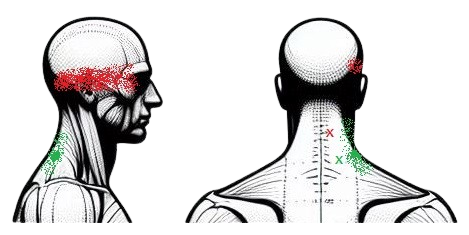
• Pain Referral Pattern
Pain often refers to the back of the neck and head, as well as to the shoulder area.
It can cause headaches, neck stiffness, and restricted range of motion in the head and neck, mimicking symptoms of tension-type headaches or cervicogenic headaches.
Pain Pattern
Upper Trp
Lower Trp
• Potential Causes
• Poor posture, especially with forward head posture or rounded shoulders.
• Repetitive strain from activities involving neck extension or rotation.
• Prolonged periods of looking up or down, such as during computer or phone use.
• Stress and tension, especially in the neck and upper back muscles.
• Trauma or injury to the head or neck.
• Prevention Tips
• Maintain proper posture, especially keeping the head aligned over the shoulders.
• Incorporate regular stretching and strengthening exercises for the neck and upper back muscles.
• Take breaks and adjust ergonomics during activities involving prolonged neck extension or rotation.
• Manage stress through relaxation techniques and regular physical activity.
• Avoid prolonged periods of looking up or down, and maintain a neutral head position.