Principle 8: Multicultural programming for children enables children to develop an awareness of, respect for, and appreciation of individual and cultural differences.
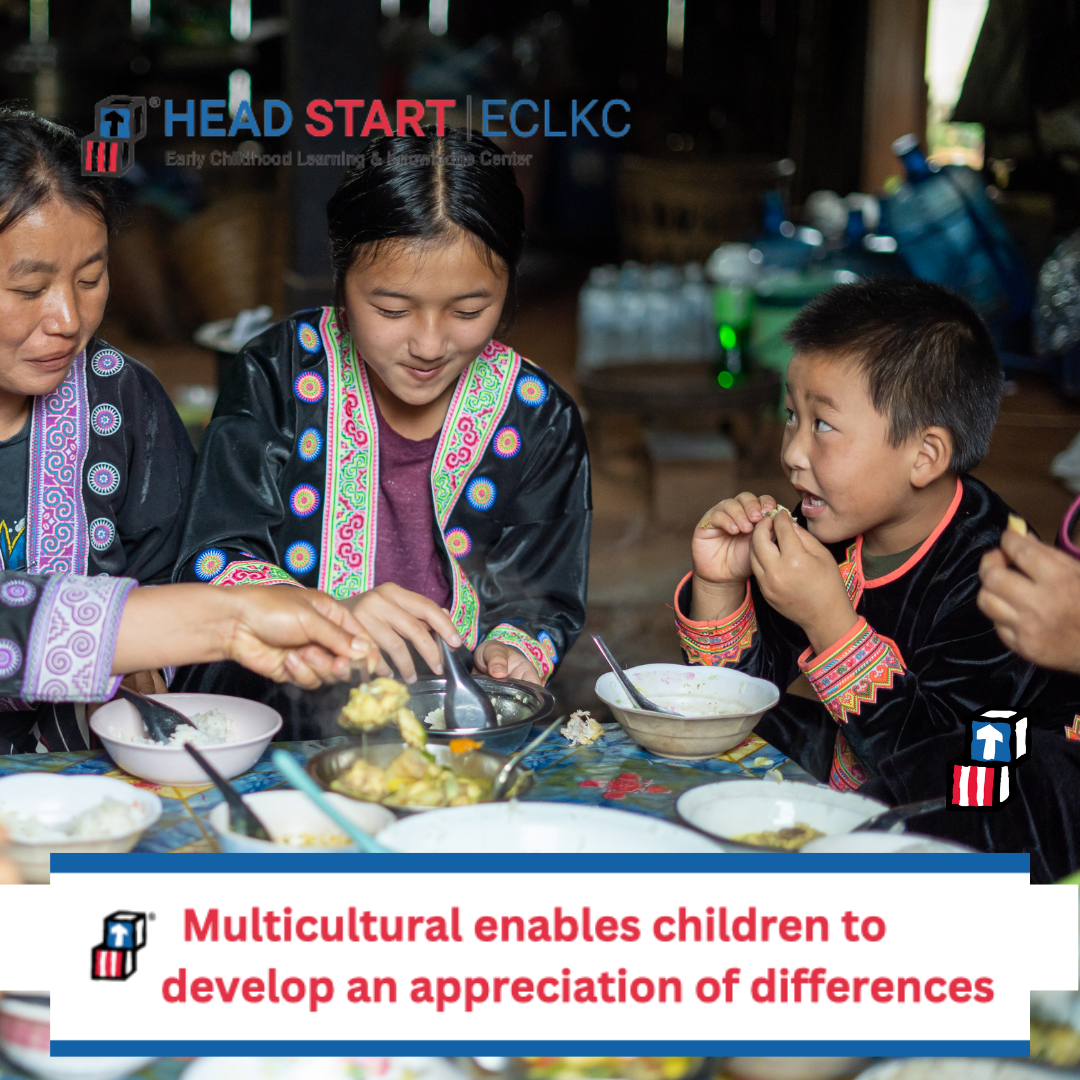
Cultures differ in many ways in their approach to feeding and mealtimes.
The culture can provide structure to these events as well as initiate children into practices and procedures defined as “acceptable.”
• Diversity within classrooms and homebased socialization experiences can be the starting points for planned learning experiences and discussions about individual differences.
• Cultural information should be integrated into everyday environments and learning experiences rather than taught as an occasional activity.
• An important goal is to develop children’s capacity to communicate effectively with people who are different from themselves.
Nevertheless, individuals within a culture make their own choices about how to live, how to act, what values to hold, and what beliefs are personally important.