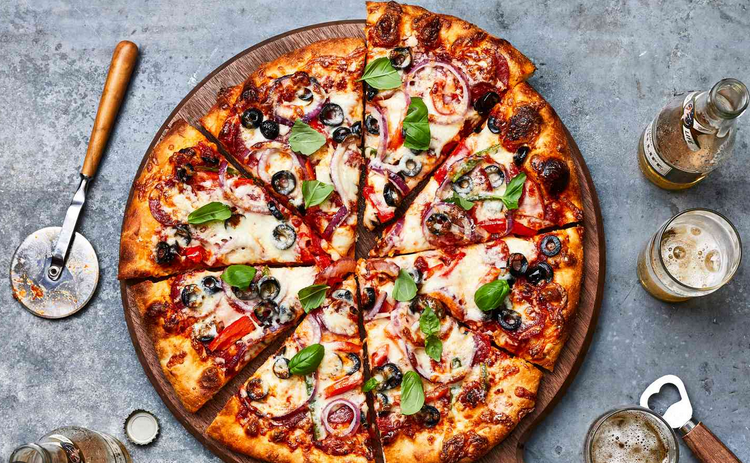
The best lesson I can offer is the understanding of how to balance foods.
I give you this: What does a pool, your skin, your gut, soil, shampoo, fruit juices, and much more have in common?
pH balance. It is the perfect balance between Acid and Alkaline.
I give you this example:
You had pizza a few days ago - you spent hours belching from the acid. You may have even taking the old Tums™ for heartburn.
Now 2 weeks from now you have pizza once again and it doesn't bother your system at all.
So, what's the difference?
The balancing of acid and alkaline on your pizza. Let's build a pizza.
First, you have a crust. Doesn't matter if its crispy or deep dish. Alone, this is very bland and alkaline.
Next, you smother that crust with tomato sauce. Liquid Acid!
Now you need some toppings for that pizza. Lets say, pepperoni, made with citric acid and phosphates. Acid.
Sausage, well, because of the ingredients in sausage, it is considered an acidic food.
Onions, without question, acidic.
Say you like bell peppers on the your pizza, acid!
So, now we need to try and balance that pizza before we run for the bro-mo-seltzer!
Okay, lets add mushrooms, alkaline.
Black olives. alkaline.
If you think about it, there are not many items you can think of that top a pizza that are alkaline - with the exception of CHEESE!
This is why I will always recommend you do the extra cheese on your pizza to create balance.
Pretty simple if you think about it!
In order to provide your meal with the appropriate balance of flavors, you will need to be able to recognize the different tastes in order to build a balanced meal.
SO, what are the flavors we are tasting when we assess our dish or sauce.
1. Sweet
2, Salty
3. Sour
4. Bitter
In recent years a fifth flavor has been added to the original four. “Umami.” Umami is considered a Savory flavor. Umami, which is triggered by glutamic acid is one of the basic five tastes including sweet, sour, salty, and bitter. Umami means “delicious savory taste” in Japanese, and its taste is often described as the meaty, savory deliciousness that deepens flavor.
Umami is detected in the center of the tongue.
(opinion) I really don't consider Umami to be a natural taste unless it occurs naturally. The process of adding chemicals (MSG) should not be included.
So, where do we taste these flavors in foods?
Simply, our tongue. Here is an image of the “Tongue Map.”
Where We Taste Food
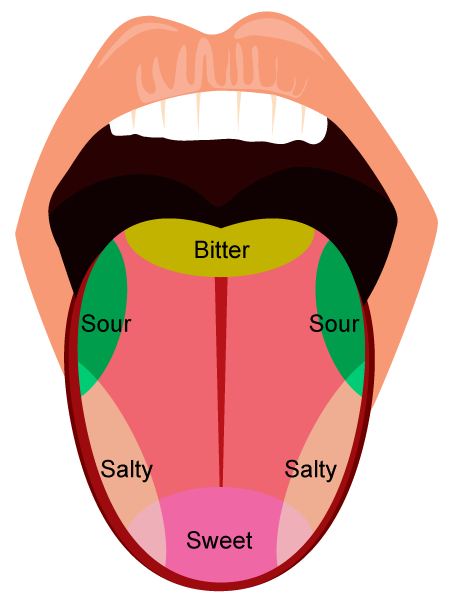
Okay, think about this. You are eating sunflower seeds in the shell. You will feel a numbness along the front sides of your tongue as well as the very front tip edge (not shown in this illustration).
To the front and middle you will savor that chocolate glazed doughnut.
You have a quick shot of tequila and follow it up with a juicy lime wedge - the back sides of your tongue as well as the lower mandibles!
Finally, you are preparing a dish or sauce and it has burned to the bottom of the pan … you will feel this in the back of the tongue and the throat.
Each of these can be used to balance your item.
If a sauce is too salty, add an acidic ingredient to balance it out, wine, vinegar or even a tomato product.
Too Sweet? Lemon, red wine vinegar or even balsamic vinegar.
If your dish is too sour, add a dash of sugar or cream to soften the blow.
Now, if your dish or sauce is bitter, most likely it has burned. First, add it to a clean pan before you get burnt flakes in it. This can also be balanced with a touch of a sour ingredient like lemon or vinegar. Add a fatty ingredient like oil, cream, or butter these will also tame bitterness.