Slurries
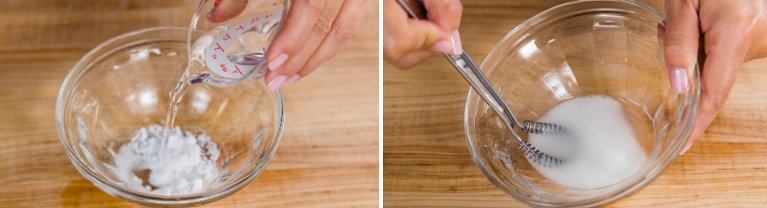
Slurries
Warning: With any thickening, always add cold to hot or hot to cold!! Never combine at the same temperature to avoid lumping.
1. Cornstarch:
Advantages: Cornstarch is a common thickening agent that is readily available and easy to use. It creates a smooth texture and does not alter the taste of the dish significantly. It works well with acidic. ingredients. Proportions are 1 to 1 water and cornstarch mixed very well.
Disadvantages: Cornstarch tends to lose its thickening power if overcooked or subjected to prolonged heat. It can also create a slightly cloudy appearance in certain dishes. Cornstarch will loose its integrity after being refrigerated.
2. Flour:
Advantages: Flour is another widely used thickening agent that is readily available in most kitchens. It provides a rich, hearty texture to gravies, sauces, and soups. It is versatile and can be used in both hot and cold preparations. Proportions, 3-4 tablespoons flour and ½ cup water or broth.
Disadvantages: Flour needs to be cooked for a longer time to eliminate the raw taste, which can affect the overall flavor of the dish. It may also cause lumps if not mixed properly.
3. Arrowroot:
Advantages: Arrowroot is a gluten-free thickening agent. It creates a clear, glossy texture and does not alter the taste of the dish significantly. It can be used in a wide range of recipes. Do this by mixing equal parts arrowroot powder and cool water (or other liquid.) Whisk this up before adding to your recipe, and always add it near the very end of cooking to avoid clumping.
Disadvantages: Arrowroot has a lower thickening power compared to cornstarch or flour. It is also more expensive and less readily available in some regions.
4. Thickening with a Liaison
Advantages: A little used thickener is the use of a liaison, egg yolks. This is achieved by whisking egg yolks until smooth and a bit frothy. The egg yolks are then tempered with small amounts of the hot stock as not to cook the eggs. When they are close to the heat of the stock, they are added in and the entire mixture is whisked until the egg yolks are incorporated. Recommended 4 egg yolks to every 6 cups of sauce or stock.
Disadvantages: Egg yolks have limited thickening power . Once a liaison is added, never allow it to boil because the egg yolks will curdle and have a grainy appearance.
To make a slurry in cooking, follow these simple steps:
1. Choose your thickening agent: The most common thickening agents used for slurry are cornstarch, flour, or arrowroot. Select the one that best suits your recipe and when it is to be served. (A reminder: cornstarch and arrowroot used for thickening will lose its integrity if overcooked or refrigerated after preparation. For these reasons, a roux is the best choice).
2. Measure the ingredients: Determine the amount of thickening agent and liquid you need based on your recipe.
3. Mix the thickening agent with liquid, I recommend using a small mason jar so it can be shaken to remove lumping. Continue shaking until the mixture is smooth and free of lumps. (This can also be done in a small bowl using a whisk).
4. Add the slurry to your dish: Once the slurry is prepared, slowly pour it into the dish you want to thicken. Stir continuously with a whisk to ensure even distribution of the slurry.
5. Cook and stir: Place the dish over medium heat and bring it to a simmer. As the mixture heats up, the slurry will start to thicken the sauce, gravy, or soup. Stir continuously to prevent the slurry from clumping or sticking to the bottom of the pan.
6. Observe the consistency: Keep an eye on the consistency of your dish as it thickens. If the desired thickness is not achieved, you can make and add more slurry following the same proportions.
7. Adjust seasoning: Once the dish has reached the desired consistency, taste and adjust the seasoning if necessary. Remember that adding a slurry may dilute the flavors slightly, so you may need to add a few drops of acid or other seasonings to balance the taste.
For greater thickening power in soups and gravies, learn to make the perfect roux.